
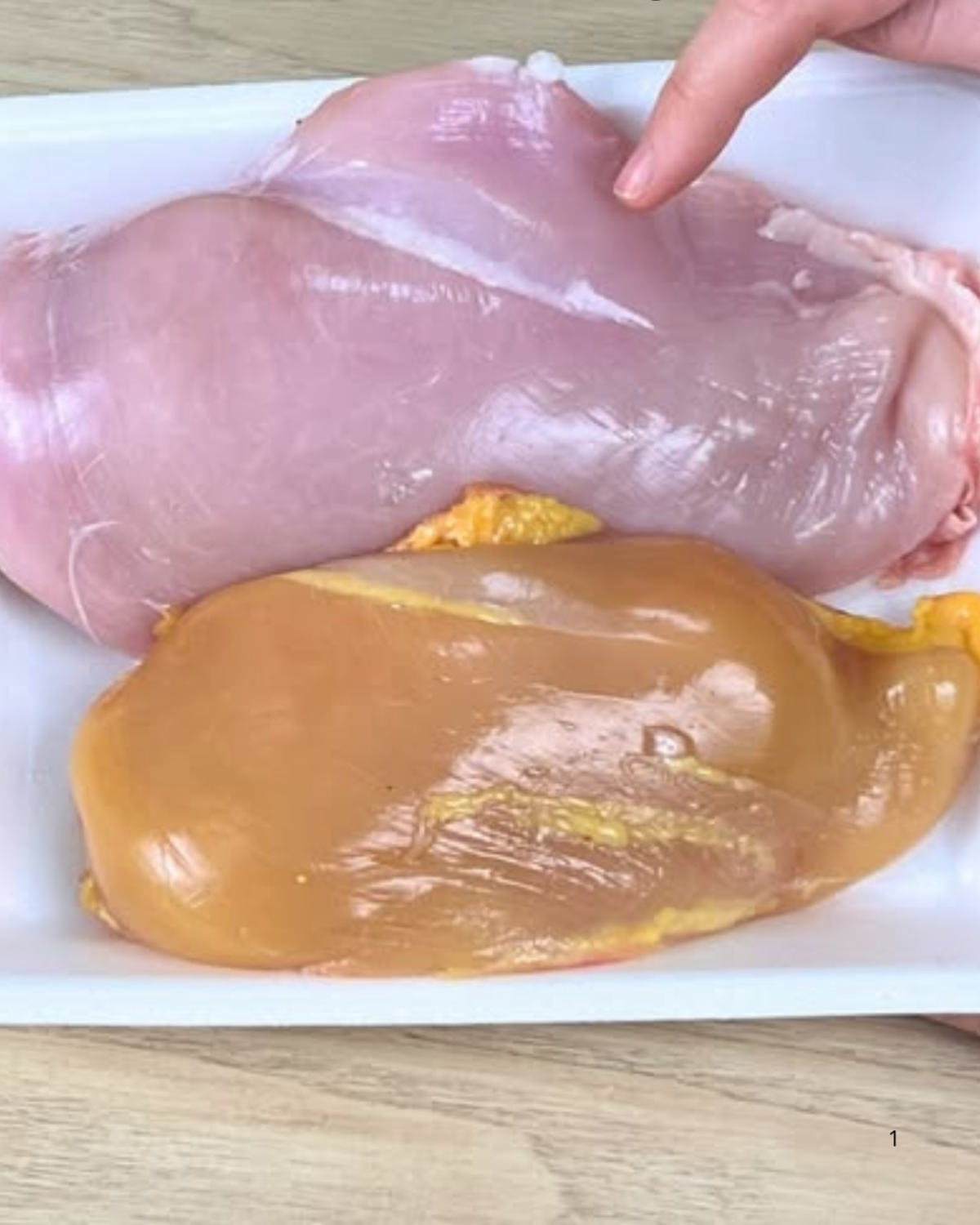
When you’re standing at the butcher’s counter or walking through the supermarket, you may notice something interesting: not all chicken looks the same. Some cuts appear pale white or light pink, while others have a deeper yellow tone. This visible difference often raises questions—does color mean better quality? Is one healthier or tastier than the other?
Let’s take a closer look at what really determines the color of chicken and what it actually means for you as a consumer.
Is Color a Sign of Quality?
Many people assume that the color of chicken is directly linked to its quality. In reality, this isn’t true.
The color of chicken meat is influenced by several factors, but it does not automatically indicate whether the product is better, healthier, or more nutritious. A yellow chicken is not inherently superior to a white one, and vice versa.
If you want to make an informed choice, the most reliable source of information is always the label. It provides details about:
Origin
Farming method
Animal diet
Certifications
These factors matter far more than color alone.
What Determines the Color of Chicken?
1. Diet: The Main Factor
The most important factor affecting the color of chicken is what the animal eats.
Chickens fed diets rich in carotenoids—natural pigments found in foods like corn, fresh grass, and marigold flowers—tend to develop a yellowish color in their skin and fat. These pigments accumulate in the tissues, giving the chicken its golden appearance.
On the other hand, chickens fed diets based on grains such as wheat, soy, or sorghum—foods low in carotenoids—usually have paler, white or pink meat.
In some cases, natural pigments like xanthophylls (a type of carotenoid commonly found in corn) are added to feed to enhance the yellow coloration.
2. Age and Farming Method
The age of the chicken and how it is raised also play a significant role.
Intensively farmed chickens (broilers) are typically raised for rapid growth and are slaughtered young, usually between 40 and 60 days. Because of their short lifespan and controlled diet, their meat tends to be lighter in color.
Slow-growing or free-range chickens, often associated with yellow skin, are raised for a longer period—sometimes 80 days or more. This allows more time for natural pigmentation to develop, especially if the chickens have access to outdoor areas where they can eat plants rich in carotenoids.
These farming conditions can also influence texture and flavor, not just color.
3. Genetics: A Secondary Influence
Genetics can also affect the color of chicken, but its impact is relatively minor compared to diet and age.
Some breeds naturally produce slightly darker or lighter meat. However, this difference is usually subtle and not something most consumers can easily identify at a glance.
Does Color Affect Taste or Nutrition?
This is one of the most common questions—and the answer is: not significantly.
Taste: Yellow chicken may sometimes have a slightly richer flavor, especially if it comes from slower-growing or free-range animals. However, the difference is more closely related to diet and lifestyle than color itself.
Nutrition: Both white and yellow chicken offer similar nutritional value, including protein, vitamins, and minerals. The color does not make one healthier than the other.
What Should You Really Look For?
Instead of focusing only on color, consider these factors when buying chicken:
Farming method (free-range, organic, conventional)
Animal welfare standards
Ingredient quality in the feed
Freshness and proper storage
These elements give you a much clearer picture of the product’s quality.
Final Thoughts
The difference between white and yellow chicken comes down mainly to diet, age, and farming practices—not quality.
Color can be visually appealing and may hint at how the chicken was raised, but it shouldn’t be the only factor guiding your decision. A well-informed choice comes from understanding the full story behind the product.
So next time you’re shopping, don’t let color alone decide—look deeper, read the label, and choose what best fits your preferences and values.
ADVERTISEMENT
