
Engaging Introduction
Let me tell you about my lifelong struggle with the humble baked potato.
For years, I considered myself a decent cook. I could roast a chicken. I could make a damn good lasagna. But baked potatoes? Mine were always a disappointment. Leathery skin. Dense, gluey centers. Uneven cooking raw in the middle, burnt on the outside. I’d poke them with a fork, slather them with butter, and pretend they were fine. But they weren’t fine. They were sad.
Then one night, a friend who used to work in a steakhouse came over for dinner. I was about to wrap my potatoes in aluminum foil (as I’d always done) when she stopped me. “What are you doing?” she asked. “Baking potatoes,” I said, confused. She grabbed the foil out of my hand and threw it back in the drawer. “No. We’re doing this right.”
That night, I learned that everything I thought I knew about baked potatoes was wrong.
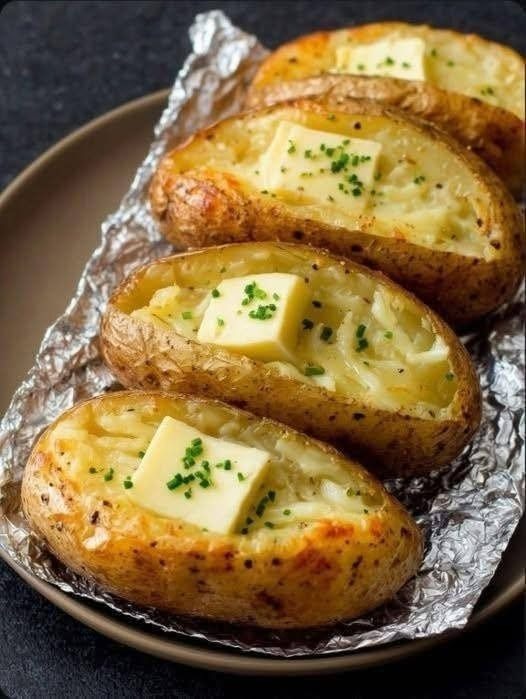
A perfectly baked potato is a thing of beauty crackling-crisp skin giving way to a cloud-like, tender interior that’s ready to cradle butter, sour cream, cheese, or chili. Yet so many end up soggy, tough, or unevenly cooked. The secret isn’t luck it’s technique.
Follow this foolproof method (tested across ovens and potato types) for perfect baked potatoes every single time. No more guesswork. No more sad potatoes. Just crispy, fluffy, glorious perfection.
Why Most Baked Potatoes Fail (And How to Fix It)
Let me diagnose your potato problems.
Problem #1: Soggy, chewy skin
You wrapped your potato in aluminum foil. Foil traps steam, which steams the skin instead of crisping it. Stop wrapping.
Problem #2: Dense, gluey interior
You used the wrong potato. Russets are for baking. Waxy potatoes (red, gold, fingerling) have too much moisture and turn pasty.
Problem #3: Uneven cooking
You didn’t pierce the skin. Steam builds up inside and the potato can explode (yes, really). Or you crowded the oven. Potatoes need air circulation.
Problem #4: Raw center, burnt outside
Your oven was too hot. Low and slow is the answer. 400°F is the sweet spot.
Problem #5: Bland, boring potato
You didn’t season the skin. A baked potato with plain skin is a missed opportunity. Salt, oil, and pepper transform it.
Kidney Health Supplements
Once you understand what goes wrong, fixing it is simple. Let me walk you through the method.
Choosing the Right Potato (This Matters More Than You Think)
Not all potatoes are created equal. For baking, you want one thing: Russet potatoes (also called Idaho potatoes).Fruits & Vegetables
High starch content (makes the inside fluffy)
Low moisture (prevents gumminess)
Thick skin (crisps up beautifully)Snack Foods
Large size (perfect for a meal)
What NOT to use for baking:
Red potatoes (waxy, moist, dense interior)
Yukon Golds (creamy, buttery, but not fluffy)
Fingerlings (too small, too waxy)
New potatoes (thin skin, high moisture)
Save those for roasting, boiling, or mashing. For baking, always choose Russets.
How to pick the best Russets at the store:Fruits & Vegetables
Look for firm, heavy potatoes (no sponginess)
Avoid green-tinged skin (solanine, a natural toxin)
Avoid sprouting (old)
Avoid cuts, bruises, or soft spots
Size matters: choose uniform potatoes so they cook evenly
The Foolproof Method (Step-by-Step)
Step 1: Preheat Your Oven
Preheat to 400°F (200°C) . Not 350°F (too low, takes forever, skin won’t crisp). Not 425°F or higher (outside burns before inside cooks). 400°F is the Goldilocks temperature.Dairy & Eggs
Place a rack in the middle position. If baking multiple potatoes, leave space between them for air circulation.
For Complete Cooking STEPS Please Head On Over To Next Page Or Open button (>) and don’t forget to SHARE with your Facebook friends.
ADVERTISEMENT
