
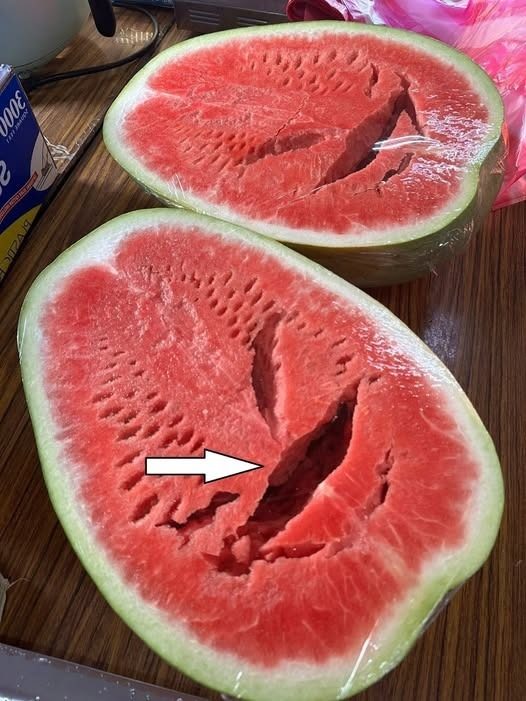
Some articles claim cracks mean the fruit was treated with growth chemicals like chlorfenuron. That’s misleading:
Chlorfenuron is sometimes used in agriculture, but
Cracks alone are NOT proof of chemical use
Most cracked watermelons are simply affected by growing conditions
So jumping straight to “dangerous” isn’t justified.
❗ When should you NOT eat it?
Now, this part does matter. You should avoid eating the watermelon if you notice:
Bad or sour smell
Slimy or mushy texture
Fermented or fizzy taste
Very dark, dull, or discolored flesh
👉 These are real signs of spoilage.
✅ When is it still safe to eat?
If the watermelon:
Smells fresh
Tastes normal
Has firm (even if slightly uneven) texture
➡️ It’s generally safe, even if it has some cracks.
🛒 How to choose a good watermelon
Look for a uniform shape
Choose one with a creamy yellow field spot
It should feel heavy for its size
Tap it—it should sound deep and hollow
✔️ Bottom line
Cracks inside a watermelon might look strange, but they usually mean natural growth issues, not danger.
Still, always trust your senses—if it smells or tastes off, don’t eat it.
ADVERTISEMENT
