
Engaging Introduction
Let me tell you about the nut that almost broke my skepticism.Health
For years, I rolled my eyes at “superfood” claims. Everything is a superfood now. Kale. Blueberries. Quinoa. Avocados. It feels like every week there’s a new article telling you that if you’re not eating some obscure berry from the Amazon, you’re basically failing at life.
So when a friend told me I should eat more walnuts, I nodded politely and ignored her.
Then I started reading the actual research. Not blog posts. Not influencer testimonials. Peer-reviewed studies, meta-analyses, clinical trials. And I’ll be honest I was stunned.
Walnuts aren’t trendy. They’re not expensive. They’re not exotic. They’ve been sitting in the bulk bins at your grocery store forever, quietly waiting for you to notice them. And the science behind them is genuinely impressive.
We’re talking about a food that can improve your cholesterol, support your brain as you age, feed the good bacteria in your gut, and even help with weight management all for about 20 calories per nut.
This isn’t hype. This is decades of research.
So let me walk you through what the science actually says about walnuts: the proven benefits, the right amount to eat, and a few things you should know before you start eating them by the handful.
What Makes Walnuts Different from Other Nuts?
Let’s start here. All nuts are healthy. Almonds, pistachios, cashews, pecans they’re all packed with nutrients.Food
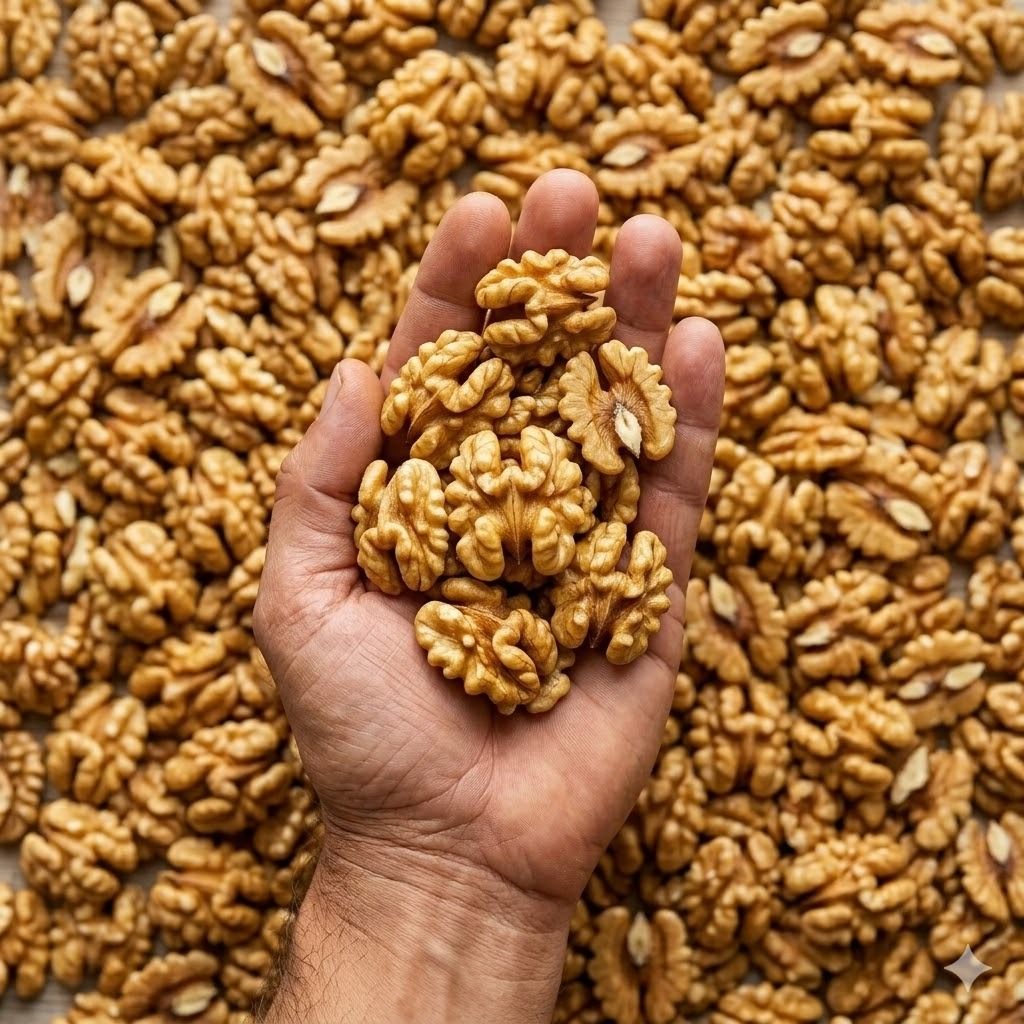
But walnuts are different in one crucial way: they’re the only nut with a significant source of alpha-linolenic acid (ALA) , a plant-based omega-3 fatty acid.
Most people think of omega-3s as coming from fish (salmon, mackerel, sardines). And that’s correct. But walnuts offer a plant-based alternative. One ounce of walnuts (about 14 halves) contains 2.5 grams of ALA that’s more than double the daily adequate intake for adults.
Why this matters: Omega-3s are essential fats. Your body can’t make them. You have to get them from food. And most people don’t eat enough.
Walnuts also have the highest antioxidant content of any nut. The skin of the walnut (the slightly bitter, papery layer) is packed with phenolic compounds and flavonoids that you don’t get from blanched or shelled nuts.
The Science-Backed Health Benefits of Walnuts
Let me walk you through what the research actually shows. I’ve focused on the benefits with the strongest evidence.
1. Walnuts Improve Cholesterol and Heart Health
This is the most well-established benefit. Dozens of studies have looked at walnuts and cardiovascular health.Health
What the research says: A 2018 meta-analysis of 26 clinical trials found that walnut-rich diets significantly reduced total cholesterol (by about 3-5%) and LDL “bad” cholesterol (by about 4-6%). The effect was strongest when walnuts replaced saturated fats (like butter, cheese, or fatty meats) rather than simply being added to the diet.
Another large study (the Walnuts and Healthy Aging study) followed over 700 older adults. Those who ate walnuts daily for two years showed significant improvements in LDL cholesterol levels compared to the control group.
Why this happens: The ALA omega-3s, polyunsaturated fats, and antioxidants in walnuts work together to reduce inflammation in blood vessels, improve endothelial function (how well your blood vessels relax and constrict), and lower circulating cholesterol levels.
2. Walnuts Support Brain Health and May Slow Cognitive Decline
This one surprised me. The shape of a walnut vaguely resembles a brain and in this case, nature might actually be hinting at something real.
What the research says: A 2020 study of over 3,000 older adults found that those who ate walnuts regularly had significantly better cognitive test scores than those who didn’t. The difference was equivalent to about two years of age-related decline meaning walnut eaters had the cognitive function of people two years younger.Food
Another study from the University of California, Los Angeles (UCLA) found that higher walnut consumption was associated with better memory, faster processing speed, and greater mental flexibility.
Why this happens: The combination of ALA omega-3s, polyphenols, and vitamin E in walnuts reduces oxidative stress and inflammation in brain tissue. These are two major drivers of neurodegeneration. Walnuts may also improve the function of the blood-brain barrier, protecting the brain from harmful circulating compounds.
Important note: These studies show association, not causation. But the evidence is strong enough that eating walnuts regularly is a reasonable, low-risk strategy for brain health.
3. Walnuts Feed Your Gut Microbiome (And That’s a Big Deal)
We’re learning that gut health affects everything immunity, mood, weight, even chronic disease risk.
What the research says: A 2018 study found that eating walnuts daily for 8 weeks significantly increased beneficial gut bacteria specifically species that produce butyrate, a short-chain fatty acid that reduces inflammation and supports the gut lining.
Walnuts act as a prebiotic, meaning they provide food for your good gut bacteria. The polyphenols in walnuts are metabolized by gut bacteria into active compounds that then enter your bloodstream and influence your entire body.Science
For Complete reading Please Head On Over To Next Page Or Open button (>) and don’t forget to SHARE with your Facebook friends.
ADVERTISEMENT
