
ADVERTISEMENT
ADVERTISEMENT
If You Find This Insect in Your Home, Here’s What It Means
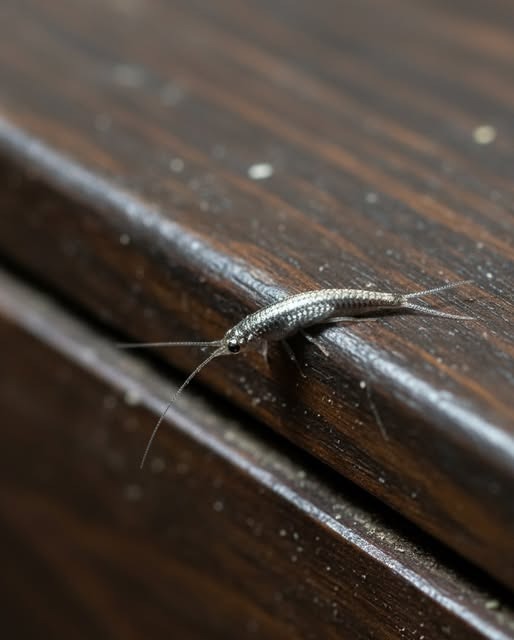
Who Is This Little Visitor?
Scientific name: Lepisma saccharina — “sugar-loving creature”
Size: ½ to 1 inch long (about the length of a paperclip)
Appearance: Silvery-gray, soft-bodied, carrot-shaped, covered in glistening scales that give them a metallic sheen
Movement: Fast, undulating glide—like a snake, like a fish, like something from another time
And it is another time.
Silverfish have been on Earth for over 400 million years—older than dinosaurs, older than flowers. They thrived in the damp forests of the Carboniferous period… and now, they’ve found a cozy niche in our bathrooms and basements.
They don’t fly. They don’t jump.
They simply arrive—where moisture, warmth, and quiet converge.
 What Silverfish Are Really Saying
Seeing one silverfish isn’t a crisis.
It’s a clue.
Because silverfish don’t survive in just any home.
They thrive only where conditions are just right for them—and that tells you something important about your space.
Here’s the translation:
 1. “The air is too moist.”
Silverfish breathe through their skin—and they need humidity between 75% and 95% to stay hydrated.
Your ideal indoor humidity? Just 30–50%.
If they’re in your:
→ Bathroom — lingering steam from showers isn’t venting well
→ Basement — damp concrete, poor airflow, or condensation on pipes
→ Laundry room — wet clothes left too long, or a leaky washer hose
They’re not causing the dampness.
They’re responding to it—like moss on a north-facing stone.
2. “There’s water hiding where you can’t see.”
A slow drip behind the vanity. Condensation pooling under the sink. A hairline crack in a pipe.
Silverfish find these micro-habitats—and settle in.
They’re not pests.
They’re moisture detectives, quietly mapping the places your home needs a little love.
3. “There’s food—but not the kind you eat.”
Silverfish don’t crave crumbs. They crave starch and sugar—in surprising places:
The glue in book bindings and photo albums
Starchy wallpaper paste
Cotton towels, linen sheets, even silk blouses
Dry pantry goods (oats, flour, cereal)
Even dandruff in your shower drain
So that box of old cookbooks in the basement?
That open bag of flour under the counter?
That’s not clutter—it’s a buffet.
 How to Respond — With Care, Not Panic
You don’t need poison. You don’t need an exterminator (not yet).
You need awareness—and a few gentle, time-tested steps.
 Step 1: Dry the Air — Gently but Firmly
Moisture is the root. Address this, and the rest follows.
Run your bathroom fan for at least 20 minutes after every shower—or crack a window.
Place a dehumidifier in basements or laundry rooms (even a small 30-pint unit makes a difference).
Fix leaks promptly—even a drip-per-minute adds up to gallons per month.
Wipe down sinks and tubs after use. Hang damp towels to dry—don’t leave them pooled on the floor.
 Goal: Get humidity below 60%. A $10 hygrometer (from the hardware store) will tell you exactly where you stand.
Step 2: Declutter with Purpose
Not “clean more”—store smarter.
Move books, papers, and photos out of damp zones—and into sealed plastic bins (not cardboard!).
Transfer flour, oats, and cereal into glass or airtight containers.
Vacuum baseboards, under furniture, and behind toilets weekly (they love dust and skin flakes).
This isn’t about perfection.
It’s about respect—for your space, your things, and your peace.
Continued on the next page
For Complete Cooking STEPS Please Head On Over To Next Page Or Open button (>) and don’t forget to SHARE with your Facebook friends.
ADVERTISEMENT
