
Safety first.
Always start by turning off the stove and shutting off the gas supply. This simple step ensures safe cleaning. Then remove the grates and burners for easy access to the nozzles.
To dissolve stubborn dirt
, pour a little white vinegar (or a mild product suitable for aluminum) onto each nozzle and let it sit for 5 to 10 minutes. The vinegar will soften the grease and loosen the deposits without damaging the metal.
To unclog gently,
use a toothpick, a fine needle, or a small piece of wire to delicately remove any debris. The idea is not to scrape, but rather to clear the openings one by one, patiently and gently.
Clean and dry.
Then wipe with a clean cloth or paper towel to remove any traces of vinegar and remaining residue. Before reassembling the burners, make sure they are completely dry—this is essential for successful ignition.
Test the result.
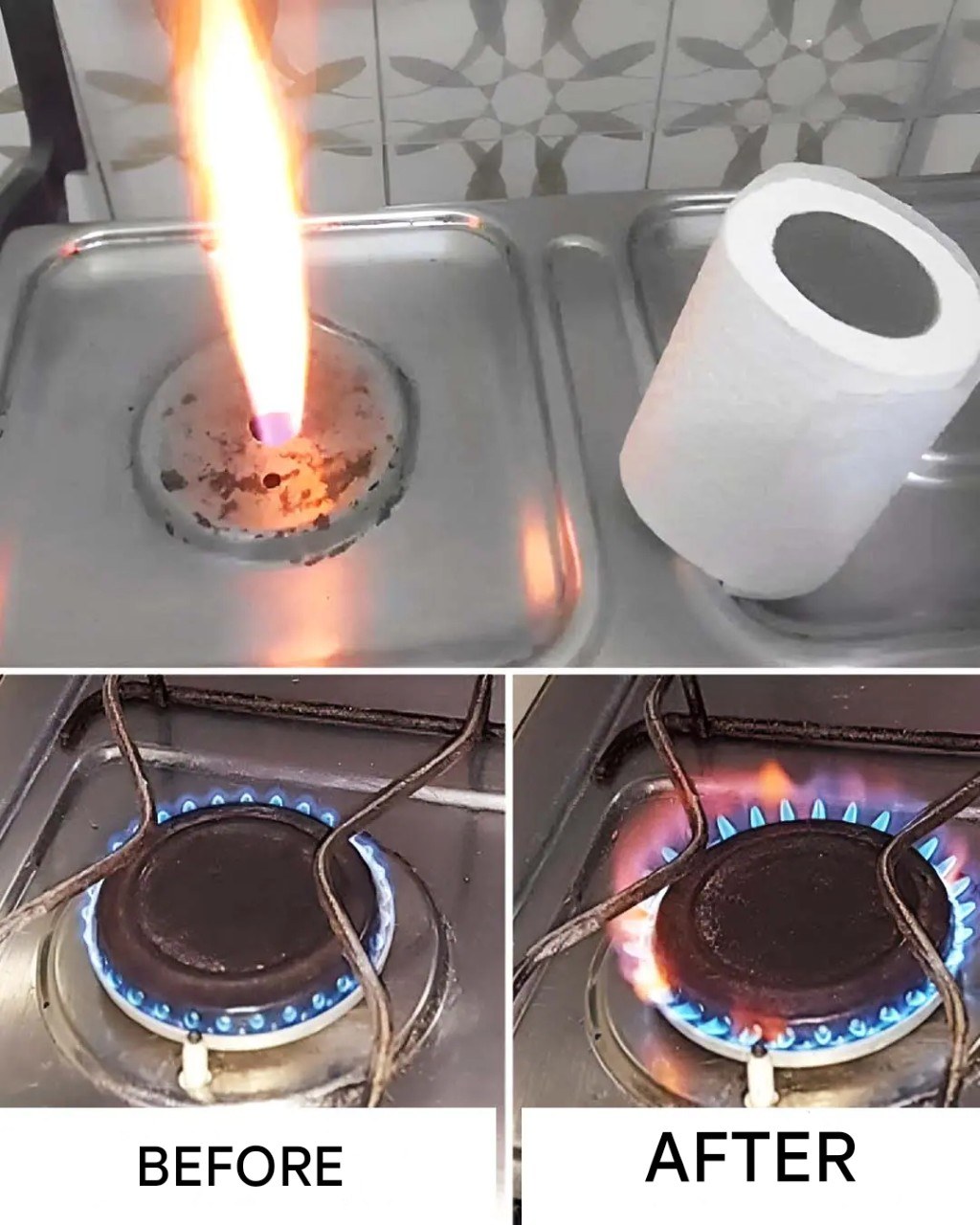
Replace the parts, turn your stove back on, and observe the flame. If it’s blue, bright, and steady, you’ve succeeded! You’ve just restored its full power.
Clever little tricks to keep a perfect flame
Regular maintenance, every two to three months, is enough to prevent buildup.
Avoid abrasive products that can dull or scratch the aluminum burners.
Clean after splattering (sauces, frying, etc.) before the grease dries.
Remember to check the condition of the grates: if they are greasy, they can also impede heat distribution.
And if the flame remains weak despite these precautions, simply cleaning the gas inlet nozzles (usually accessible under the burners) may be all it takes to get the job done.
A little effort for a big difference.
In just ten minutes, you can transform a tired flame into a bright, stable, and efficient one. Your stove regains its full power, your dishes cook faster, and your energy consumption naturally decreases. Proof that a simple maintenance step can revitalize your entire kitchen!
ADVERTISEMENT
